In Industry 4.0, data is strengthening its position as a strategic asset. However, its true value only becomes apparent when it is used in the right way, at the right time. This is precisely where the combined use of Edge Computing and Industrial IoT is changing the game. Together, they are transforming factories into intelligent, responsive, and resilient environments that are more efficient than the centralized model we are used to.
Why has the Edge become indispensable?
For a long time, industry sent all its data to the cloud. Convenient, but not always optimal. Today, machines generate massive volumes of data, often critical: vibrations, temperature, pressure, speed, quality, energy consumption, etc.
Waiting for data to be sent to and from the cloud for analysis means accepting:
- latencies that are incompatible with real-time operations,
- skyrocketing bandwidth costs,
- increased security risks,
- total dependence on connectivity.
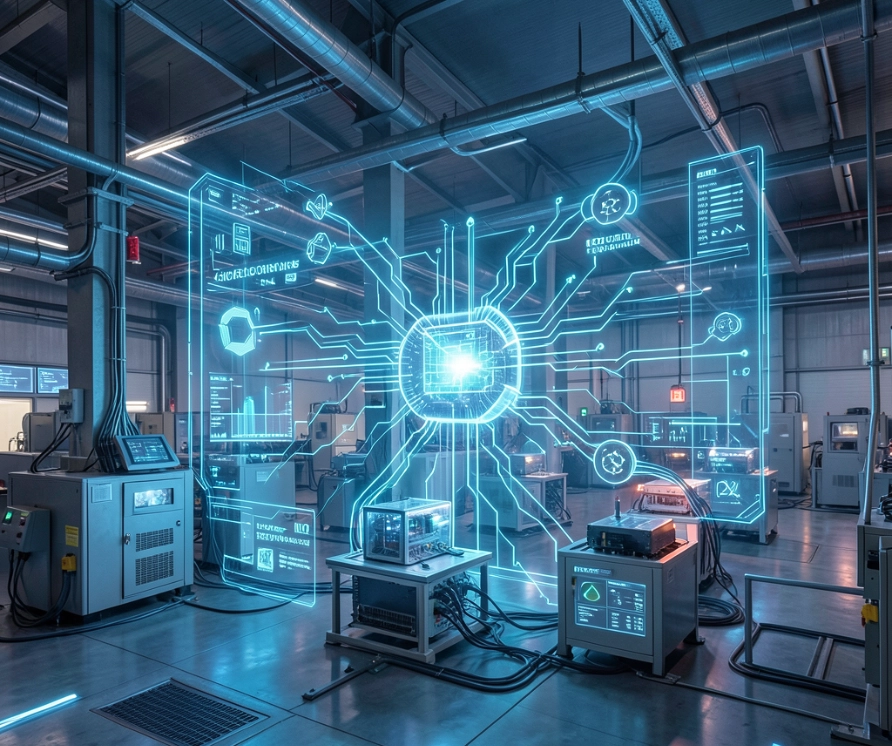
Edge computing reverses this logic: processing takes place directly at the equipment, where the action needs to happen.
The result: instant decisions, greater autonomy, and operational continuity even in the event of a network outage.
When industrial IoT meets the edge: a performance accelerator
Industrial IoT (IIoT) provides sensors, data, and field visibility. The Edge provides productivity, speed, and the ability to take local action.
- Real-time predictive maintenance: immediate detection of anomalies, anticipation of breakdowns, optimization of maintenance cycles.
- Continuous quality improvement: instant analysis of defects, automatic adjustments to production parameters.
- Energy cost reduction: local monitoring, dynamic consumption optimization, smart alerts.
- Secure operations: local filtering of sensitive data, reduction of attack surfaces, smart segmentation.
A strategic lever for manufacturers
Companies that adopt this winning duo see tangible benefits:
- +30 to +50% operational responsiveness
- Up to 40% reduction in unplanned downtime
- Measurable energy savings from the very first months
- Greater resilience to cyber threats
But above all, they gain a decisive competitive advantage: the ability to leverage their data in real time to make faster, more reliable, and more profitable decisions.
The future of Industry 4.0 will be distributed
Edge computing does not replace the cloud: it complements it. The cloud remains the ideal platform for: advanced analytics, AI model training, multi-site consolidation, global governance.
This hybrid, intelligent, distributed, and secure model is becoming the standard for Industry 4.0.