What if AI became an ally of the transition rather than a roadblock? For El Mehdi Benjelloun, Sustainability Manager, it all starts with a domino effect: the more AI consumes, the more tech giants fund new renewable capacity, and the more mature these technologies become. In this interview, he explains what AI concretely changes for ESG reporting, why human judgment remains decisive, and how EnvoEdge helps companies focus their efforts on the actions that truly matter.
ESG and AI: who stands to benefit?
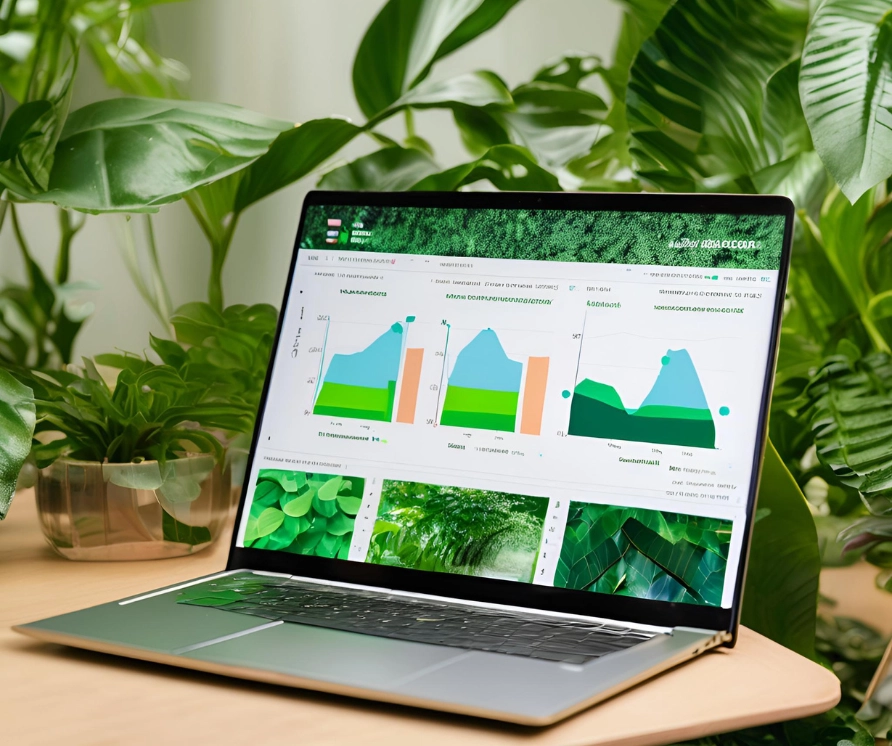
Absolutely. Today, AI acts as a catalyst: it enables us to interpret and analyse data more effectively, and this is a key advancement. Not so long ago, producing an ESG report took several months. Stakeholders would change partway through, data would be duplicated, and some information would get lost along the way. With AI, these difficulties are gradually disappearing. We can even take it a step further: contrary to popular belief, AI does more than just save time. It enables companies to make their impact more precise and better targeted. Instead of launching ten random initiatives, a company can identify the two or three that really affect its emissions and costs, and focus its efforts on those.
Who really benefits from this combination?
First and foremost, the planet. An oxymoron, isn’t it? Let’s look at the facts. Today, sustainability remains a secondary concern for many companies, and AI, with its energy consumption, risks further exacerbating climate change. Yet I like to think of it as a domino effect. Energy has become a question of long-term cost. Few solutions offer a stable price over 20 or 25 years, without relying on a fuel whose price fluctuates, and solar power is one of them. It is no coincidence that the tech giants have become the world’s leading buyers of renewable electricity. In 2025, Amazon, Meta, Google and Microsoft alone accounted for nearly half of all clean energy contracts signed by companies, and solar power is the most commonly chosen technology in these contracts. This trend is only set to grow. The more energy AI consumes, the more it funds new renewable capacity, and the more these technologies mature: it’s a virtuous circle. Energy is just one example. The issue of water, which is essential for cooling data centres, is just as important. But I believe in human ingenuity. A positive mindset, combined with a cost-optimised strategy, can work wonders.
Do large corporations have a head start, or is AI reshuffling the deck for SMEs?
Asking who has a head start isn’t really the right question. The fact that some are ahead in this area is good news. Let the leaders set the example, as they are already doing today. They are the ones testing solutions, making the initial investments and driving down costs for everyone. Their lead thus gives smaller players the opportunity to make a positive contribution to the environment too.
Isn’t there a risk that AI will primarily be used to facilitate greenwashing?
Like any driver of development, AI has two sides. It is a powerful tool, but it can be used to cut corners, or even to spin messages to appear virtuous when the reality is quite different. It is both a risk and a boon. A boon for humans, because their judgement becomes even more indispensable. The easier it is to produce a polished report, the greater the value lies in the ability to verify its contents: where does this figure come from? Is it consistent with invoices and actual data? Is the stated commitment being upheld over time? AI can, in fact, help carry out this verification by cross-referencing statements with data. But it is humans who make the final decision and take responsibility.
How does EnvoEdge use AI to support ESG?
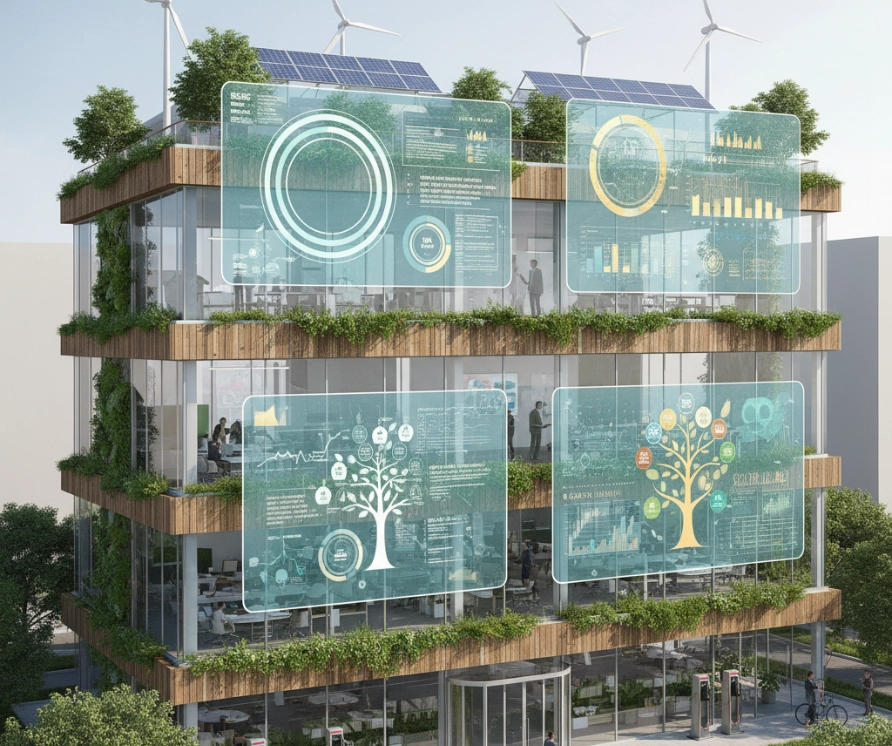
At EnvoEdge, the team is guided by a firm belief: technology does not replace people; it enhances their capabilities. AI lies at the heart of the solution. The tool developed by the team optimises data, informs decision-making and maximises positive impact. In practical terms, it automates data collection and verification, produces a comprehensive carbon footprint assessment covering all emission sources, and maps the value chain to identify where the real challenges lie. The time saved on data collection can then be devoted to what really matters: choosing the right actions and measuring their results.
What does the future hold on this subject?
The future looks promising. The team’s role is to support both senior decision-makers and operational staff in optimising their work and decision-making. The aim is to provide them, in addition to their own added value, with a real and measurable impact. This is how we will build a more sustainable – and equally competitive – ecosystem. Because sustainability is not a cost: it is a benefit.